Most pool renovations start the same way: you're standing on the deck looking at a pool that still works fine but doesn't look or feel like it used to. Faded plaster, dated tile, a pump that runs louder every year. At some point the question shifts from "does this still work" to "is it time."
If you're at that point, here's what actually goes into a renovation, and what drives the cost and timeline.
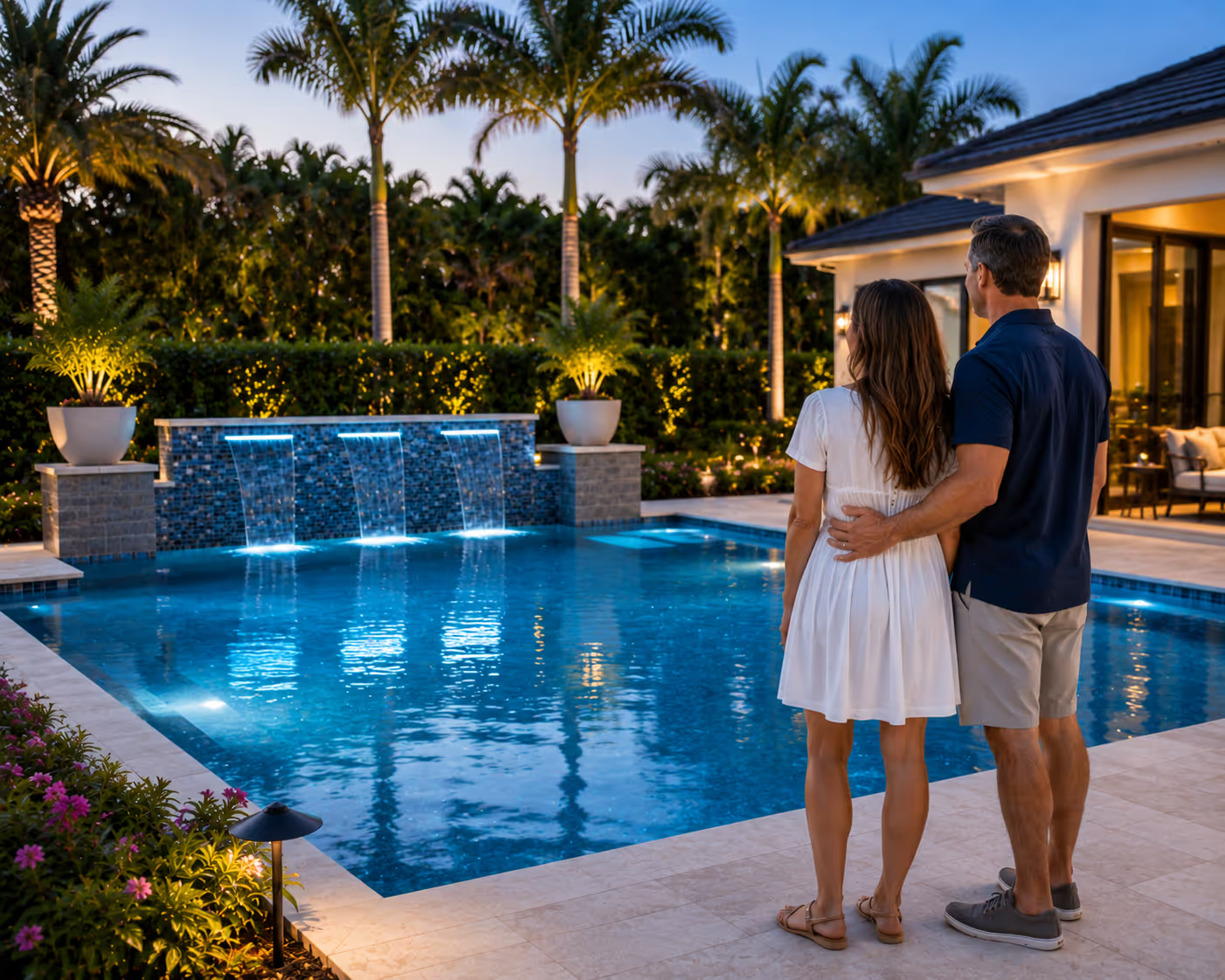
A pool renovation can mean a lot of different things depending on what your pool needs. On the lighter end, that's resurfacing worn plaster and updating tile and coping. On the more involved end, it can mean upgrading to modern, energy-efficient equipment, adding new lighting, or reworking the pool with features it never had, like a waterfall or a linear water feature. Some renovations touch all of it. Others just handle the one thing that's actually bothering you.
The first real step is figuring out which category your project falls into, since that decision drives almost everything else.
There's no single number that applies to every renovation, because the honest answer is that cost depends on a handful of specific factors:
Scope of work. Resurfacing alone is a very different project than resurfacing plus new equipment plus added water features. Each piece adds its own cost.
Material choices. Standard plaster, pebble finishes, and tile all carry different price points, and the same is true for coping and decking materials.
Equipment condition. If your pump, filter, or heater is original to the pool and near the end of its life, replacing it during the renovation is often more efficient than doing it as a separate project later, but it does add to the total.
Access and site conditions. A pool that's easy to get equipment and materials to costs less to work on than one behind a narrow gate or through a finished interior.
We walk every renovation project in person before quoting, specifically because these factors vary so much house to house. A quote based on square footage alone, without seeing the actual pool, isn't going to be accurate.
Timeline depends on similar factors, plus a few specific to Florida. Permitting is one of the bigger variables. St. Johns, Putnam, and Flagler counties each have their own review process, and how quickly a permit clears is mostly out of anyone's hands once it's submitted.
Weather is the other real factor. Renovations that involve fresh plaster or resurfacing need dry, stable conditions to cure properly, which makes Florida's rainy season a harder window to work in than spring or fall.
Scope matters here too. A resurfacing-only project moves faster than one that includes equipment replacement, new water features, and updated lighting, simply because there are more trades and more steps involved.
Worth being direct about this. A renovation refreshes and upgrades a pool that's structurally sound. It's not a substitute for addressing real structural problems like significant cracking, settling, or shell damage. If we see signs of that during a walkthrough, we'll say so before quoting a standard renovation, because those issues need a different conversation.
Renovation also won't change the size or shape of your pool without a more significant, and more expensive, scope of work. If what's driving the renovation is wanting a bigger pool or a different layout entirely, that's closer to a rebuild than a refresh.
The only way to get an accurate sense of cost and timeline for your specific pool is to have someone look at it in person. Stanford Custom Pools serves St. Johns, Putnam, and Flagler counties, and we're happy to walk your property and talk through what your pool actually needs, not a generic package.
Request a consultation to get started.