
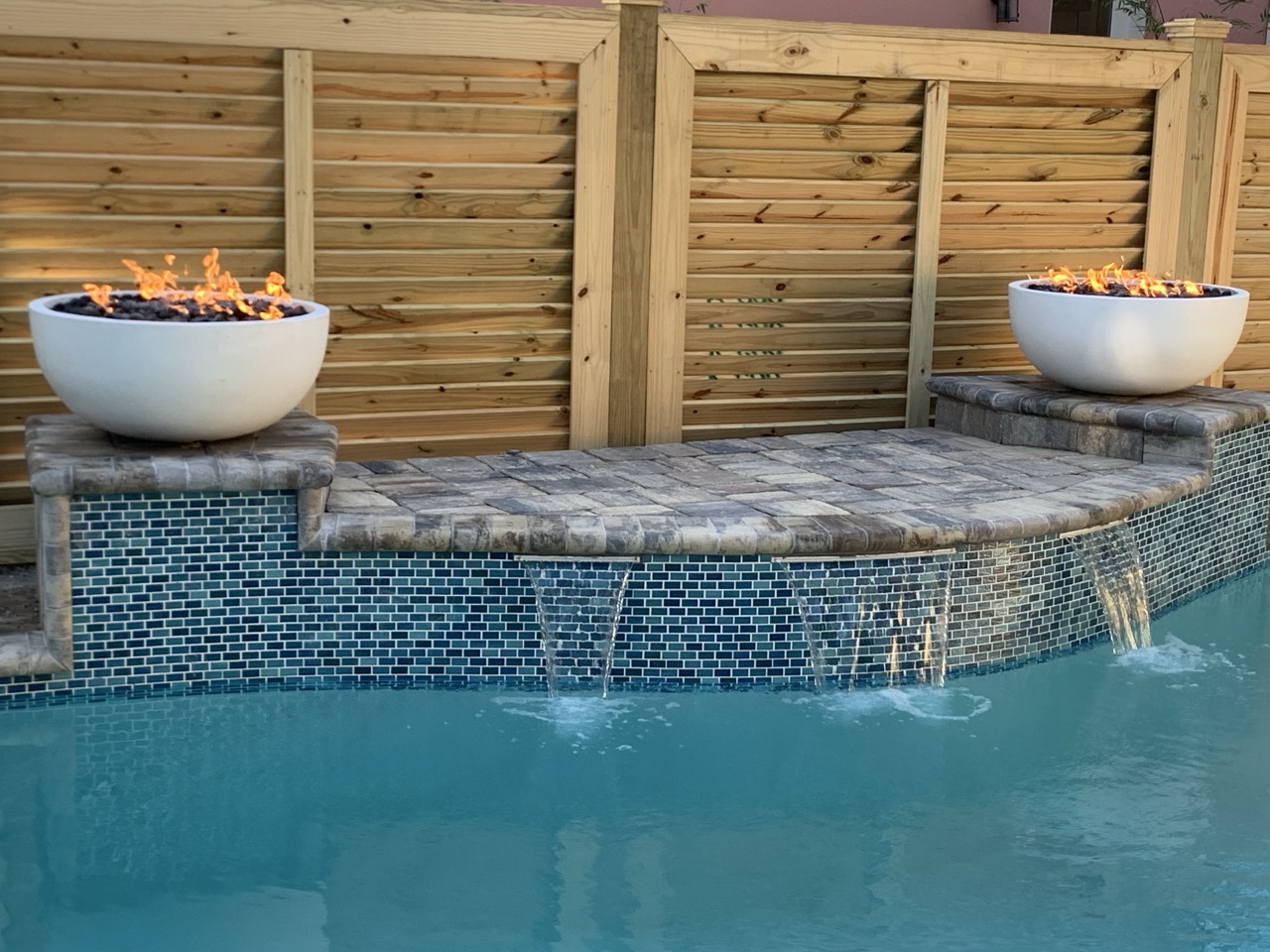
Most homeowners who ask about water features already have a picture in mind: a smooth sheet of water spilling into the pool at dusk, or the sound of a waterfall carrying across the patio. The harder question is which kind fits the pool, the backyard, and the way the family actually uses the space. Here is how the main options differ, and what to think through before adding one.
Moving water changes how a backyard feels. It adds sound, which softens neighborhood noise, and it gives the eye something to settle on, day or night. Water features are a detail we plan into new pools and spas, and they can also be added to an existing pool during a pool renovation.
A sheer descent drops a clean, smooth sheet of water into the pool, usually from a raised wall or the edge of a spa. It suits modern designs with straight lines and reads as calm rather than splashy. If the look you want is clean and architectural, this is usually where the conversation starts.
Waterfalls lean natural. Built from stone, they can tumble gently or move more water with more sound, and they work well in backyards with heavier landscaping where the pool should feel like part of the yard rather than something set into it. They take up more room than a sheer descent, so the layout of the deck and planting beds matters.
Deck jets send arcs of water from the deck into the pool, and bubbling fountains add movement right at the water's surface. Both bring a lighter, more playful feel without taking up wall space, and kids tend to treat them as part of the pool rather than decoration.
Some of the most striking poolside designs combine the two, with fire features like fire bowls set near a water feature so the backyard works as well at night as it does in the afternoon. If you are planning a bigger outdoor space, both can be designed together as part of a custom outdoor design rather than added piece by piece.
Every water feature changes how water moves through the pool system. Larger features can need more pump capacity, and the plumbing has to be planned around them, which is simpler during a new build than a retrofit, though adding one to an existing pool is often possible during a renovation. Moving water also adds aeration, which tends to push pH up, so expect to check water chemistry a little more closely when features run often.
Cost depends on the type and size of the feature, how much plumbing and equipment it needs, and whether it goes into a new build or an existing pool. That is why we look at the site in person before quoting anything.
It is also worth being clear about what a water feature will not do. It will not fix a worn surface, dated tile, or tired equipment. If the pool itself is the problem, a renovation comes first, and a feature can be part of that project rather than a patch on top of it. In salty, humid coastal air, the materials and hardware matter too, so we talk through what will hold up before anything is built.
Stanford Custom Pools serves St. Johns, Putnam, and Flagler counties. If you are weighing a water feature for a new pool or an existing one, we are happy to walk the backyard with you and talk through which option fits.
Ready to take the first step? Contact us today to schedule your free consultation.