Most pool owners in St. Johns County run into the shade problem during their first summer. The water feels great, but the deck is too bright to sit on in the afternoon, and the lounge chairs drift back toward the house. That is usually when the question comes up: should we add a pergola or a gazebo by the pool?
The short answer: a pergola gives you partial, filtered shade and keeps the space open to the sky, while a gazebo gives you a covered retreat with a solid roof that keeps you dry when an afternoon storm rolls through. Which one fits depends on how you use the backyard, where the sun lands on the deck, and what you want the space to feel like.
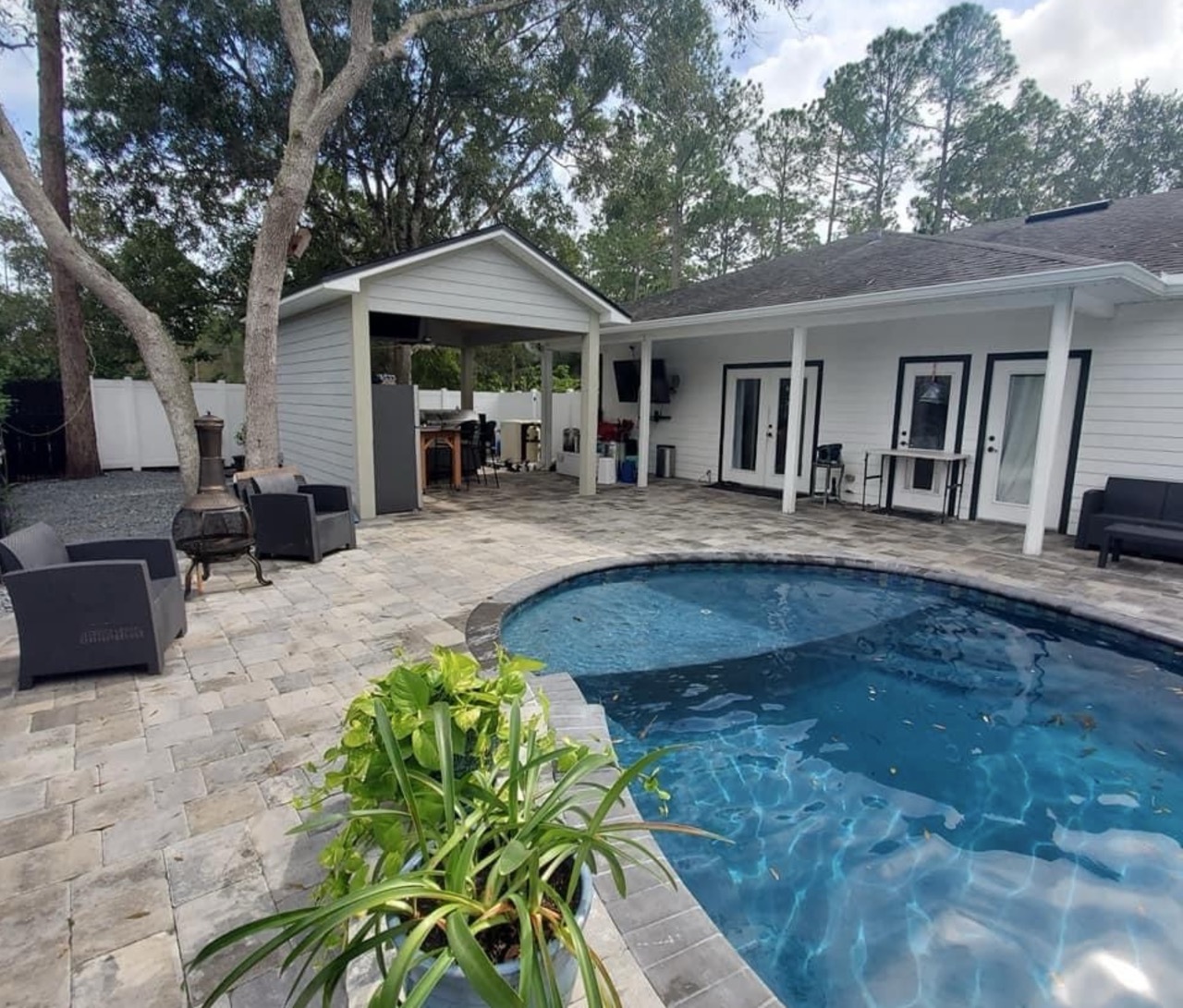
A pergola is an open-roofed structure: posts and beams with rafters or slats across the top. It takes the edge off direct sun without closing the space in, so the pool area still feels open and bright. Pergolas work best when they define a zone, like a poolside lounge, a dining table, or the counter of a summer kitchen, so that part of the deck becomes a place people actually gather.
They also come in a range of looks, from clean-lined modern frames to more classic designs, so a pergola can be matched to the architecture of the house instead of looking like an afterthought.
A gazebo is a freestanding structure with a solid roof. Where a pergola filters the sun, a gazebo blocks it, and it keeps the furniture underneath dry when the rain comes through. That makes it a natural home for seating or a dining table you want to use in any weather, or a quiet place to sit near the pool with a morning coffee.
Because a gazebo usually stands on its own, it tends to become a destination in the yard: somewhere you walk to, rather than a covering over a spot you already use.
A pergola will not keep you dry. Its roof is open by design, so rain and some sun come through. A gazebo keeps the rain off, but its solid roof makes the space underneath darker, and it only covers the area under it, not the whole pool deck.
Neither one keeps bugs out or cools the air. Both are open-air structures, so a humid August afternoon still feels like August, just in the shade. If insects and leaves in the water are the real problem, a screen enclosure is a different conversation, and we cover those tradeoffs in our post on whether you actually need a screen enclosure for your pool.
A few questions usually settle it:
A shade structure works best when it is planned with the rest of the backyard, including the patio or deck it sits on and any cooking or seating area nearby. That is part of what custom outdoor design covers, whether it happens alongside a new pool or as an addition to the backyard you already have. We build with weather-resistant materials and talk through what will hold up in salty, humid coastal air before anything goes up.
Cost depends on the type and size of the structure, the materials, how it is anchored, and the site itself. Permitting runs through whichever county you live in, and St. Johns, Putnam, and Flagler each have their own review process. We handle the design, engineering, and permitting, and we do not quote a number before seeing the yard in person.
Stanford Custom Pools serves St. Johns, Putnam, and Flagler counties. If you are deciding between a pergola and a gazebo, we are happy to walk the backyard with you, look at where the sun falls, and talk through which one fits the way you use your pool.
Ready to take the first step? Contact us today to schedule your free consultation.